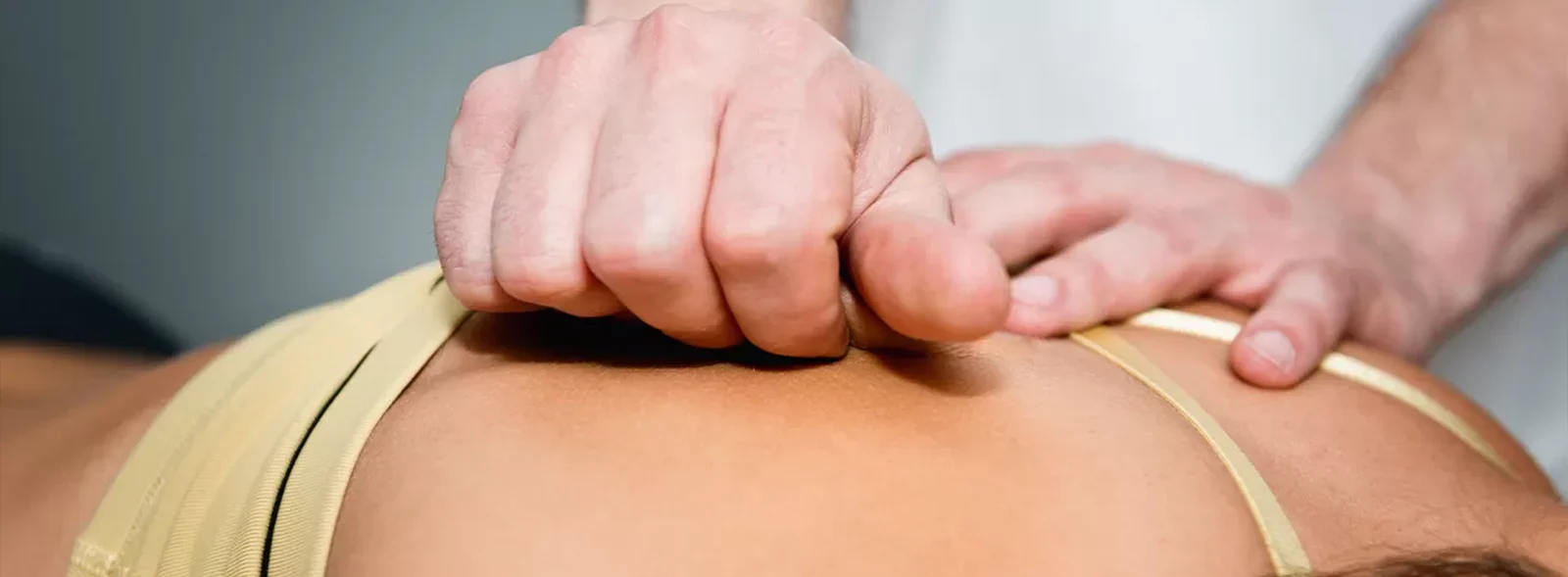
Trigger Point Therapy and Myofascial Release are advanced manual therapy techniques that focus on treating the fascia—the connective tissue that surrounds and supports every muscle, bone, and organ in the body. When this tissue loses its elasticity due to trauma, physical stress, or poor daily posture, it becomes stiff. This creates intense pressure that forms muscle "knots" and causes deep pain, which often radiates to other areas of the body.
Through the application of targeted and sustained manual pressure, our physiotherapists release these structural restrictions. This deep approach dissolves trigger points, restores free blood flow, and returns the fascia to its natural elasticity. The goal is to help you move freely again, eliminating persistent pain without relying on pain medication.
Benefits
This treatment offers a fundamental approach to managing chronic pain that often does not respond to other traditional methods. Incorporating these techniques into your rehabilitation program provides you with:
Deep tissue release and reduction of radiating pain (e.g., tension headaches originating from the neck).
Restoration of muscle elasticity and a significant improvement in your range of motion.
Correction of body asymmetries, significantly improving your posture.
Reduction of general stiffness caused by physical or emotional stress.
Optimization of muscle mechanics for a rapid recovery after sports exertion.
FAQ
Since Myofascial Release and Trigger Point Therapy are highly specific techniques, it is normal to have questions about the process. Here, we have clarified the main concepts to help you better understand this service.
Fascia is a continuous web of connective tissue—similar to a thin but incredibly strong net—that envelops all the structures of your body. When you are healthy, it is elastic and flexible. After an injury, inflammation, or prolonged inactivity, it tightens and creates painful restrictions in movement.
A trigger point is a contracted and highly sensitive area within a muscle, often felt under the skin as a hard "knot." Their main characteristic is that, in addition to local pain, they often provoke referred (radiating) pain in completely different areas of the body.
During the application of specific pressure to "melt" the muscle knot, you may feel momentary discomfort or what is known as tolerable "therapeutic pain." However, our therapists constantly communicate with you to ensure that the intensity of the pressure remains within your comfort limits.
While traditional massage uses gliding movements and oils to relax the muscle superficially, Myofascial Release is usually applied without oil. It is based on slow, stretched, and sustained pressure aimed at pulling and unblocking the stiffened connective tissue deep within your structure.
This approach is extremely effective for chronic neck and back pain, shoulder pain, fibromyalgia, cervicogenic headaches (originating from the neck), as well as hip or knee pain resulting from physical or sports overload.
As with any deep manual therapy, it is normal to feel a bit tired or experience mild muscle soreness in the treated areas for 24 to 48 hours. We advise you to drink plenty of water to help your body hydrate the connective tissue and flush out toxins released from the muscles.